Antimicrobial resistance (AMR)
To treat disease causing microbes (pathogens) we can use antimicrobials. Antimicrobials are intended to kill or slow the growth of pathogens however- microbes can develop resistance to them via Antimicrobial resistance (AMR).
Not all antimicrobials are new to microorganisms. For some like Penicillin, Erythromycin and Tetracyclines- they are natural compounds and have existed in nature even before we started using them to treat disease. Consequently, microbes have had millennia to develop ways to deal with them. For example β-lactamases– proteins which break down antimicrobials like Penicillin are billions of years old. In contrast others antimicrobials like Fluoroquinolone (used to treat bacteria) and Triazole (used to treat fungi)- are completely synthetic. Despite this microbes still have found ways to become resistant to them.
There are a myraid of ways resistance can develop and include:
- Through the expression or over expression of efflux pumps like the TolC pump
- Mutation of an antimicrobial target protein- preventing them from working.
- The microbes being able to alter or break down the antimicrobial like through enzymes like β-lactamases.
- Changing the structure and composition of their cell wall preventing the drug from getting inside of the bacteria- relevant to mycobacteria like Mycobacterium tuberculosis (Mtb) or in gram-negatives againist β-lactamases like Penicillin.
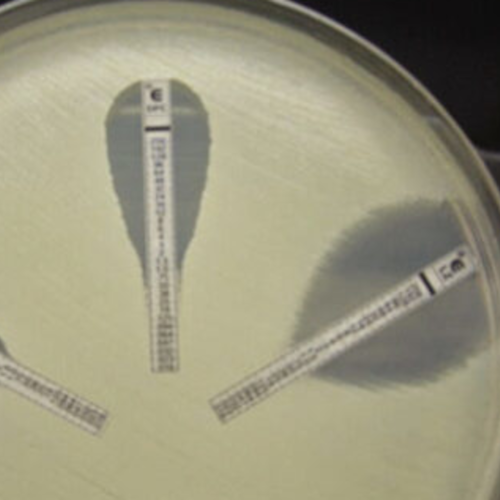
A common way to test for resistance is through zone of inhibition assays or halo assays. As seen below, agar plates are grown with a lawn of the microbe of interest. It is then treated with an antimicrobial. If the antimicrobial is effective- it should inhibit the growth and result in clearing as seen below. This can also be used to determine the minimum concentration required to treat the microbe- the Minimum inhibitory concentration (MIC)
Ways to overcome AMR
Something something screening and stuff- done with copy writing